Talent Assessment That Predicts Performance in Your Culture

Talent assessment that only measures capability tells half the story. Marlee measures motivation, then reads it against the data you already hold on your own organization: your culture, your top performers, and the manager the person would report to. Built on 25 years of research and 48 distinct work motivations with up to 98% analysis reliability.
Schedule a demoTeam performance

Trust by Individuals and Teams in 194+ Countries

500_Startups_-_logoCanva_LogoCanva_LogoAtlassian-logoamazon_logo 500_Startups_-_logoKPMG_logoCanva_LogoCanva_LogoAtlassian-logoamazon_logo

194+ countries · 25 years of research · Up to 98% analysis reliability

What Talent Assessment Misses When It Only Measures Capability

Talent assessment has become a standard part of how organizations make hiring and promotion decisions. The assessments themselves have grown more sophisticated. The gap between assessment confidence and actual placement outcomes, however, has not narrowed as much as the investment would suggest.
The result is a gap between assessment confidence and real-world outcomes. Organizations rely on assessment scores to make hiring and promotion decisions, then quietly accept the variance between those predictions and actual performance as an unavoidable feature of talent management.
Generic benchmarks are part of the problem. A candidate can score well against a general model of the role and still struggle in a specific team, with a specific manager, in a specific culture, because that is where the work actually happens.
Team collaboration

How Marlee Predicts Fit With Your Culture, Team, and Manager

Talent leaders who understand what motivates each person make better placement, development, and retention decisions. Marlee maps 48 distinct work motivations with up to 98% analysis reliability, then reads each candidate against the motivational data of the team they would join rather than against an industry average.
Marlee's approach to talent assessment is built on the Marlee Motivational Analysis: 25 years of research measuring 48 distinct work motivations. Because your existing teams have completed the same analysis, Marlee can read a candidate against your Custom Culture Map, benchmark them against X-Factor models built from your own top performers, and show where their motivations align or conflict with their prospective hiring manager.
For talent leaders, this turns assessment into a prediction about a specific role in a specific team, rather than a general statement about a candidate.
For a talent team, that means:
insight_1_

Predict how a candidate will work in your culture

Marlee builds a Culture Map from the motivational data of your existing teams. Each candidate is read against it, so you can see how they are likely to work day to day in your organization rather than how they perform in the abstract.
insight_1_

See where friction with the hiring manager is likely

Marlee compares a candidate directly with the manager they would report to, showing where their motivations align, where they diverge, and which differences are likely to create friction. That conversation happens before the offer rather than six months into the role.
insight_1_

Put talent insight in the hands of everyone making the decision

Talent insight should not be locked in talent team dashboards. Marlee puts motivational understanding, and the benchmark drawn from your own top performers, in front of every leader making a talent decision: the hiring manager choosing between two candidates, and the people leader supporting a high-potential through a career transition.

What Changes When Talent Decisions Are Built on Motivation, Not Just Capability

Talent leaders who use Marlee report higher confidence in their talent decisions, and better outcomes from them. Placements hold. Development investments land. Retention improves in the cohorts where motivational understanding is highest. The gap between talent management intent and talent management results gets smaller.

Talent decisions built on something more reliable than capability scores

Talent leaders who assess motivation alongside capability report higher confidence in their decisions and better outcomes from them.

Placements that hold because they are built on motivation, not just capability

Talent decisions built on motivation alongside capability are more accurate. The assessment predicts not just whether someone can do the work, but whether the conditions of the role, team, and environment will allow them to do it well.

Talent assessment that predicts performance in your teams, not in general

Assessment that predicts performance in a specific role, team, and culture is more useful than assessment that predicts general capability. Marlee provides the motivational layer, and your own team data provides the context that makes the prediction specific.

A talent function that makes better decisions because it understands motivation

A talent function that understands what motivates each person makes better decisions across every talent process: more accurate placement, more effective development, and earlier identification of the situations where someone is likely to underperform or leave. Reading a new hire against their manager from day one is part of that, since the differences that usually take a year to surface become something the pair can work with immediately.

Beyond a standard talent assessment platform

Talent assessment platforms measure candidates against generic benchmarks. Marlee measures them against yours: your culture, your top performers, and the manager they would work for.

Your culture as the benchmark, not an industry average

Talent assessment results are most valuable when they inform decisions that are still open. Marlee surfaces motivational insight at the talent moments that matter: not just in the hiring decision, but in onboarding, role changes, team assignments, and the development conversations that determine whether someone becomes what their assessment suggested they could be.

Built on your own team data, not on capability scores alone

Marlee connects talent analysis to how your teams actually collaborate, decide, and deliver, so hiring decisions are made against the environment the person is joining.

Consistent talent assessment quality across every function and level

Marlee gives enterprise talent teams a consistent foundation that works across every stage of the talent cycle and every part of the organization, with each region and function reading candidates against its own culture and top performers.

Talent Assessment Benchmarked Against Your Own Teams

Most talent assessment platforms measure what people can do against a generic standard. Marlee shows how each person is likely to perform in your culture, in that team, and with that manager.

See how Marlee works for your organization

Schedule a demo to explore how Marlee predicts culture fit, role performance, and manager dynamics across enterprise organizations.
Schedule a Demo

Research and Evidence

Marlee's approach to talent assessment is built on 25 years of research into the motivations that predict how people perform in real roles, not just what they are capable of, but what drives them to deliver. The Marlee Motivational Analysis has been validated across 194+ countries, making it one of the most reliable tools for predicting talent performance in practice.

The ADHD at Work Study

This research examines the strengths people with ADHD bring to work, and how leaders can support different ways of thinking and working, which standard assessments routinely miss.
Read more

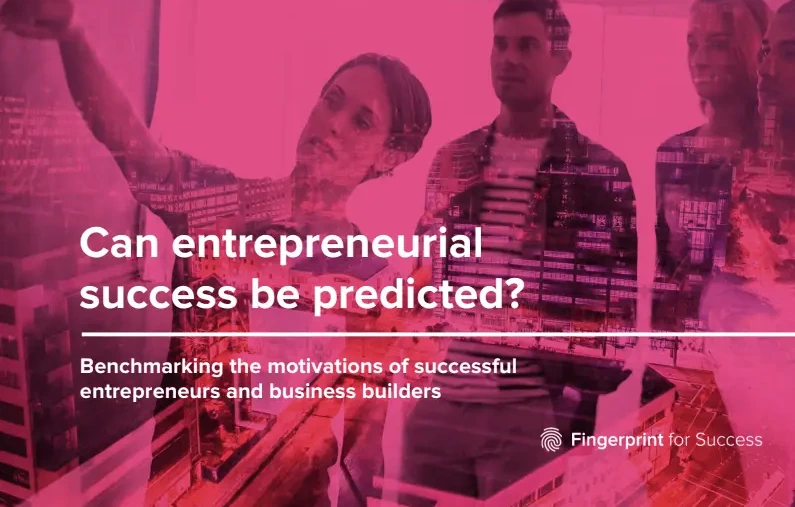
Can Entrepreneurial Success be predicted?

Marlee benchmarked the motivations of successful entrepreneurs and business builders, testing whether achievement can be predicted from motivation. The basis for assessing potential on more than a CV.
Read more
Explore Marlee's research studies

Trusted by Leading Teams

quote_1_
There's a lot of focus on hard skills. But at a company, what's absolutely critical is communication and soft skills — the things most companies don't spend enough time focusing on. Marlee has been an amazing tool to help us do that.

Melanie Perkins,

Co-founder & CEO, Canva
quote_1_
Marlee’s deep insights allowed us to focus on actual needs naturally embedded with inclusion and deep consideration as to achieving a complete experience. All subjectivity is removed and we can focus on the employees needs and growth to foster an environment of inclusion, support and belonging.

Lorraine Longato,

Senior Innovation Strategist & Co-Lead, Partnerships APJ/GC - SAP

Frequently Asked Questions

What should a talent assessment platform actually measure?

A talent assessment platform should predict how people will perform, not just measure what they can do. The most useful approach combines capability measurement with motivational insight, and reads that insight against the specific culture, team, and manager the person would be joining.

How does Marlee predict fit with our culture?

Your existing teams complete the same Motivational Analysis as your candidates, which gives Marlee a Culture Map of how your organization actually works. Each candidate is read against that map, and against X-Factor models built from your top performers in the role, so the prediction is specific to your business rather than to a market average.

Will candidates find the analysis intrusive?

How does Marlee show potential friction with a hiring manager?

Can Marlee be used for internal moves as well as external hires?

It measures motivations at work rather than personality or anything clinical, and Marlee is explicit that there are no good or bad results. A high score shows what energizes someone, a low score shows what is likely to drain them. Candidates receive their own results, so it reads as something they get rather than something done to them.
Marlee compares a candidate's motivational profile directly with their prospective manager's, showing where the two align and where they are likely to pull in different directions on pace, detail, autonomy, or how decisions get made. Hiring teams can weigh that before the offer, and the pair can work with it from the first week.
Yes, and internal moves are often where it earns the most, because the person's data already exists. You can read an internal candidate against the culture of the team they would move into and against the manager they would report to, which is the part of a lateral move that usually goes wrong.


Find out how a candidate will work in your culture, before you hire them

Schedule a demo to see how Marlee predicts culture fit, role performance, and hiring manager dynamics.
Schedule a Demo

Work

ConnectMotivateCollaborateDevelopHireBe Hired

Company

PricingMichelle DuvalOur TeamCoach & People Leader TrainingEthical CommitmentsVulnerability Disclosure ProgramContributor GuidelinesPrivacy PolicyTerms & Conditions

Resources

BlogHow To MarleeAbout UsFAQsMedia CenterResearch StudiesPersonality TypesContributorsContact UsMotivational Analysis

Solutions

High Growth CompaniesEnterpriseVCs & AcceleratorsUniversitiesTalent AcquisitionOnboardingUnlocking High Performance in ICsHigh Performance TeamsTalent DevelopmentLeadership DevelopmentTeam CommunicationCulture & AI TransformationHybrid Work & Return to OfficeResolving ConflictCase Studies

Product

Motivational AnalysisCoach MarleeHuman Coaching

© 2026 Marlee

linkedinyoutubefacebooktwitterinstagrampinteresttiktok